1. Overview
Kuki Urie is a central character in Tokyo Ghoul:re and a member of the CCG's Quinx Squad, an experimental unit of investigators implanted with ghoul Kagune to enhance their combat capabilities against the rising ghoul threat. As the son of a fallen CCG investigator, Urie carries the weight of his father's legacy and an intense personal drive to prove himself worthy of the Urie name. He enters the Quinx program with exceptional natural talent, ranking at the top of his class and immediately positioning himself as the squad's unofficial leader through sheer ambition and capability. His journey throughout :re traces among the most dramatic character arcs in the Tokyo Ghoul series, transforming from an arrogant, self-centered cadet who views his teammates as competition into a mature, selfless leader willing to sacrifice everything for those under his command. Urie's Ukaku-type Quinx Kagune grants him exceptional speed and ranged attack capabilities, though his true strength lies in his relentless work ethic and ability to learn from failure. Unlike Haise Sasaki's natural leadership style, Urie earns his position through demonstrated competence and hard-won respect. His character explores themes of legacy, the burden of expectations, and the painful process of maturing from a talented individual into a responsible leader. Urie's arc parallels and contrasts with Kaneki's journey in meaningful ways, making him one of :re's most important characters for understanding the series' broader themes about identity and growth through adversity.
2. Appearance
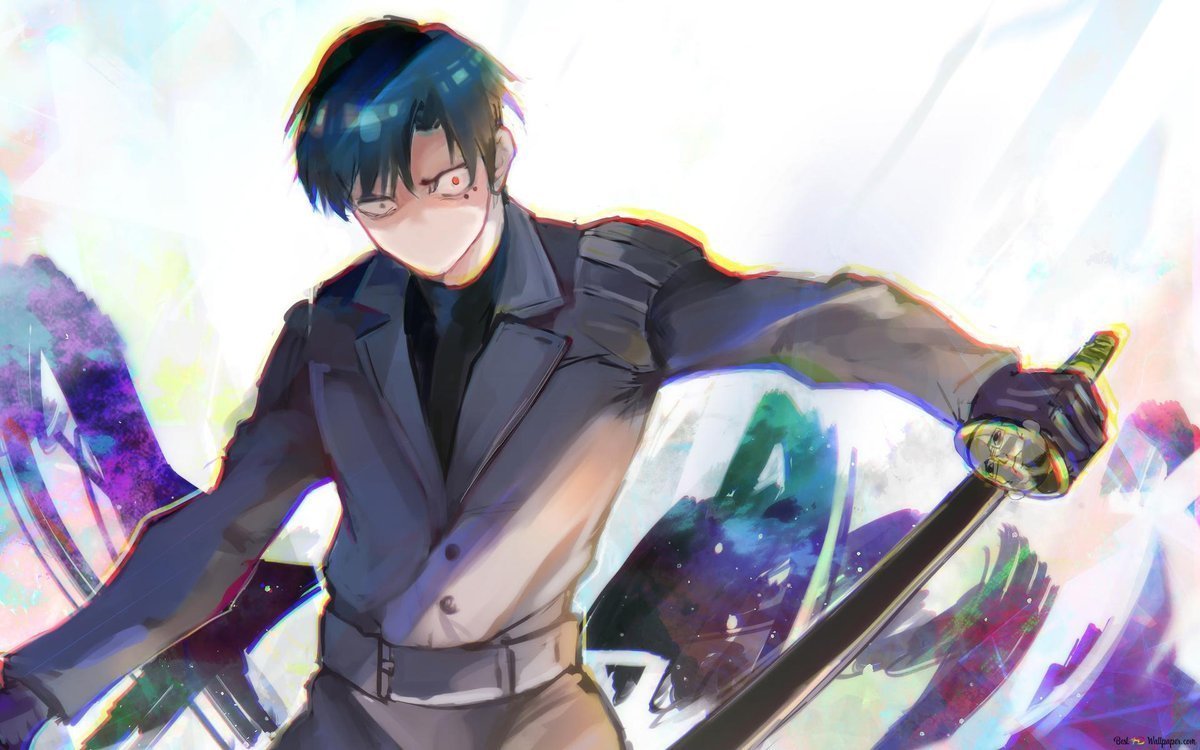
Kuki Urie has a sharp, angular face with short black hair styled neatly to maintain a professional appearance befitting his status as a CCG investigator. His features are handsome and symmetrical, with intense dark eyes that frequently betray his competitive nature and burning ambition. Standing at an average height with a lean, athletic build, Urie maintains the physical conditioning expected of a Quinx operative through rigorous training. He wears the standard Quinx Squad investigator uniform with meticulous precision, his appearance always crisp and professional, reflecting his disciplined approach to his duties. When his Quinx eye activates during combat, his left eye transforms with the characteristic crimson iris and black sclera, along with visible vein-like patterns spreading from the eye socket that mark the activation of his Ukaku Kagune implant.
As Urie progresses through the series, his appearance subtly changes to reflect his character growth. Early in :re, his posture is rigid and aggressive, his expressions frequently displaying irritation or contempt for those he considers beneath him. His uniform is worn with an almost obsessive precision that speaks to his need for control and perfection. As he matures, his bearing becomes more relaxed and confident, the constant tension in his shoulders easing as he grows comfortable in his leadership role. After significant battle damage and the physical toll of repeated Quinx use, Urie develops visible scarring and his body shows the cumulative effects of pushing his Quinx frame beyond its limits. These physical marks serve as visual evidence of his sacrifices and growth, transforming his initially pristine appearance into something that tells the story of battles fought and survived. In civilian attire, Urie dresses simply and practically, favoring dark colors and clean lines that reflect his no-nonsense personality. His overall design communicates competence and intensity, with his appearance evolving in parallel with his psychological journey from prideful cadet to battle-hardened leader.
3. Personality
Kuki Urie's personality undergoes among the most substantial transformations in Tokyo Ghoul:re, making his character arc one of the series' most compelling elements. When first introduced, Urie is defined by overwhelming ambition and a desperate need to prove himself superior to everyone around him. He views his fellow Quinx squad members as competition rather than teammates, constantly measuring his performance against theirs and seeking validation through rankings and recognition. His arrogance stems from a deep-seated insecurity rooted in his father's death in the line of duty, driving Urie to believe that only by being exceptional can he justify his existence and honor his family name. This psychological pressure manifests as dismissiveness toward others, particularly those he perceives as weaker, and a refusal to ask for help even when clearly outmatched. His early personality is characterized by a rigid adherence to protocol and a belief that following rules perfectly guarantees success, a worldview that experience will systematically demolish.
As Urie experiences failure, loss, and the genuine consequences of his arrogance, his personality undergoes a painful but necessary evolution. The death of his teammate Shirazu forces him to confront the limitations of his individualistic approach, realizing that his obsession with personal achievement endangered those who depended on him. This trauma becomes the catalyst for Urie's transformation into a genuine leader, one who values his squad's safety over personal glory. He develops empathy for his teammates, learns to delegate and trust others, and eventually earns the respect he previously demanded without justification. His relationship with Haise Sasaki, initially characterized by resentment and competition, evolves into genuine respect as Urie recognizes the qualities of leadership that transcend raw talent. By the series' conclusion, Urie has become one of the CCG's most effective and respected investigators, his personality retaining its competitive edge but tempered by wisdom gained through suffering. He remains ambitious, but his ambition now serves his squad rather than his ego. His arc powerfully illustrates how genuine strength comes not from individual prowess but from the ability to protect and uplift others, a lesson that places him among Tokyo Ghoul's most fully realized characters.
4. Abilities
As a Quinx, Kuki Urie possesses an Ukaku-type implanted Kagune that manifests as wing-like appendages capable of firing high-velocity projectile attacks. The Ukaku type is known for its exceptional speed and ranged combat capabilities, traits that suit Urie's aggressive fighting style perfectly. His implanted Kagune grants him the ability to launch razor-sharp crystalline projectiles from his Ukaku wings at devastating speeds, capable of piercing through reinforced materials and ghoul kakuja alike. The Quinx frame regulating his Kagune allows him to maintain his humanity while accessing ghoul-level combat abilities, though prolonged use pushes his RC cell count to dangerous levels that threaten his mental stability. Urie's RC cell count is notably high among the Quinx squad, granting him enhanced physical attributes including superhuman speed, strength, reflexes, and regenerative capabilities that approach those of natural ghouls.
Throughout :re, Urie develops his combat abilities through intensive training and practical experience against increasingly dangerous opponents. He learns to control the density and trajectory of his Ukaku projectiles, allowing for both suppressive fire and precision strikes. His combat style emphasizes mobility and constant aggression, using his enhanced speed to close distances or create separation as the situation demands. Urie also develops tactical awareness that compensates for his relatively lower raw power compared to natural Ukaku ghouls, learning to predict opponent movements and position himself advantageously before committing to attacks. As a CCG investigator, Urie is also trained in quinque usage, capable of wielding confiscated ghoul weapons alongside his natural Quinx abilities. This combination of implanted Kagune and investigator training makes him versatile in combat, able to adapt to different opponent types. His most significant combat development comes through learning to push beyond his perceived limits, accessing deeper reserves of power through sheer determination even when his Quinx frame is on the verge of collapse. This reckless but effective approach to combat reflects his personality development, trading ego-driven heroics for genuine sacrifice in service of protecting his squad.
5. Story Arcs
Urie's story in Tokyo Ghoul:re begins with his introduction as a member of the newly formed Quinx Squad under the leadership of Haise Sasaki. The early arcs establish his competitive personality and his resentment at being placed under Sasaki's command, whom he views as an undeserving superior. His initial missions with the Quinx squad demonstrate his combat capabilities but also reveal his inability to work effectively as part of a team, often breaking formation to pursue personal glory. The relationship between Urie and Sasaki forms a central dynamic of the early series, with Urie's constant challenges to Sasaki's authority gradually revealing the depth of his insecurities. The investigation into the Aogiri Tree and the ghoul organization's operations provides the backdrop for Urie's early character development, forcing him to confront opponents who do not respect his CCG authority or his natural talent.
The turning point in Urie's arc comes with the death of Kei Shirazu, his fellow Quinx squad member, during a mission against a particularly dangerous ghoul. Shirazu's sacrifice to protect the squad devastates Urie, who blames himself for prioritizing personal achievement over team safety. This loss becomes the foundation for Urie's transformation, as he begins to reevaluate everything he believed about strength, leadership, and the meaning of being an investigator. The Rue Island invasion arc tests Urie's new resolve, placing him in command situations where he must put his squad's safety above all other considerations. His growth is demonstrated through increasingly selfless decisions, choosing to take on overwhelming opponents alone to protect his retreating teammates rather than seeking personal combat glory. The Dragon arc represents the culmination of Urie's character development, where he operates as a fully realized leader capable of making the hard decisions that define genuine command. His survival through the final conflicts and his emergence as a leader in the post-Dragon CCG proves that his growth was not temporary but permanent, cementing his status as one of the series' most successfully developed characters. Urie's arc demonstrates that true strength is measured not by individual power but by the willingness to sacrifice for others.
6. Relationships
Urie's relationship with Haise Sasaki is the most significant interpersonal dynamic of his character arc. Initially viewing Sasaki as a rival to be surpassed, Urie's resentment stems from his belief that Sasaki's position was undeserved and that his own natural talent should have placed him in command. This competitive dynamic gradually transforms as Urie observes Sasaki's genuine care for the Quinx squad and his willingness to sacrifice for them. The revelation of Sasaki's true identity as Ken Kaneki and the subsequent psychological crisis this causes forces Urie to reconsider his understanding of strength and leadership. By the time of the Rue Island arc, Urie has developed genuine respect for Sasaki, recognizing that the qualities he once dismissed as weakness were actually the foundations of true leadership. Their relationship evolves from rivalry to mutual respect, with Urie adopting many of Sasaki's leadership traits in his own command style.
Within the Quinx squad itself, Urie's relationships undergo parallel transformations. His early dismissiveness toward Tooru Mutsuki and Ginshi Shirazu gradually gives way to protective concern and genuine camaraderie. Shirazu's death hits Urie particularly hard, transforming his guilt into a driving force for change. With Mutsuki, Urie's relationship becomes increasingly complex as Mutsuki's mental state deteriorates, forcing Urie to confront situations where protecting his squad means making impossible choices. His relationship with Saiko Yonebayashi, initially characterized by frustration at her laid-back attitude, evolves into appreciation for her unique capabilities and genuine friendship. Outside the Quinx squad, Urie's relationship with his father's legacy shapes his entire character. The pressure to live up to the Urie name drives his initial arrogance and his fear of failure, and his growth is measured partly by his ability to define his own worth independent of his father's shadow. Urie also develops professional relationships with higher-ranking CCG investigators including Kishou Arima and Kiyoko Aura, earning their respect through demonstrated competence rather than demanding it through entitlement. These relationships collectively form the social foundation of Urie's growth, each contributing to his transformation from isolated individual to connected leader.
7. Cultural Impact
Kuki Urie occupies an important place in Tokyo Ghoul:re's character ensemble as the Quinx squad member who undergoes the most significant and well-executed character development. Among fans, Urie is frequently cited as one of the series' best-written characters because of his flawed starting point and the believable, hard-won nature of his growth. Unlike characters who begin as heroes and become stronger, Urie starts as someone who is technically skilled but personally deficient, making his journey toward genuine leadership more relatable to readers who understand that talent without maturity is hollow in the end. Discussions of Urie's character often focus on how his arc subverts the typical shonen rival archetype. Rather than remaining a perpetual rival to the protagonist, Urie outgrows this role, developing independent character motivations and leadership qualities that make him valuable to the story beyond his relationship with Kaneki/Sasaki.
In fan analysis, Urie is frequently compared to other Quinx squad members in discussions of trauma and recovery in Tokyo Ghoul. His ability to process his father's death and Shirazu's sacrifice, channeling grief into growth rather than destruction, presents a contrast to characters who are broken by similar experiences. This makes Urie a subject of interest in discussions about how the series portrays psychological resilience. Cosplay of Urie appears at anime conventions, with his Quinx investigator uniform and distinctive hairstyle making him recognizable to series fans. His character arc has been praised in reviews of Tokyo Ghoul:re as one of the sequel series' strongest elements, with critics noting that Urie's development compensates for other narrative weaknesses in the second half of the story. The phrase "work harder than talent" has become associated with Urie in fan discussions, summarizing his philosophy that effort and growth matter more than natural ability. This message resonates particularly strongly with readers who identify with the struggle to improve through determination rather than innate talent. Urie's legacy within the Tokyo Ghoul fan community is as a character who earned his growth, making his final form as a leader feel genuinely earned rather than narratively granted.
8. FAQ
What type of Quinx Kagune does Kuki Urie have?
Urie possesses an Ukaku-type Quinx implanted Kagune. This type manifests as wing-like appendages that can fire high-velocity crystalline projectiles. Ukaku Kagune are known for their exceptional speed and ranged combat capabilities, traits that align perfectly with Urie's aggressive fighting style and tactical preferences.
How does Urie's character arc differ from Kaneki's?
While Kaneki's arc focuses on accepting his ghoul nature, Urie's arc centers on learning to be part of a team and leading effectively. Kaneki's growth is driven by external trauma forcing internal change, while Urie's comes from the gradual realization that his arrogant individualism harms those around him.
Who kills Shirazu in Tokyo Ghoul:re?
Kei Shirazu dies during a mission against a powerful ghoul, sacrificing himself to protect his Quinx squad teammates. His death serves as a major turning point for Urie, who blames himself for prioritizing personal achievement over team safety and uses this guilt as motivation for his character transformation.
Does Urie become the leader of the Quinx Squad?
Yes, after Haise Sasaki's identity as Kaneki is restored and he leaves the CCG, Urie assumes leadership of the Quinx Squad. His promotion represents his completed character arc from arrogant cadet to genuine leader, earning the position through demonstrated capability and selfless dedication rather than demanding it through entitlement.
What is Urie's relationship with his father's legacy?
Urie's father was a CCG investigator who died in the line of duty, leaving Urie with immense pressure to live up to the family name. This burden drives his early arrogance and fear of failure. His character growth involves learning to define his own worth independent of his father's shadow.