1. Overview
Tatara is a formidable high-ranking executive within the Aogiri Tree organization and one of its most strategically important members. Known throughout the ghoul underworld as the Flame Emperor, he commands operations across multiple wards and serves as Eto Yoshimura's most trusted lieutenant for executing her most ambitious plans. His Chinese origins are hinted at throughout the series, with his name and visual design drawing from Chinese folklore, though his exact background before joining Aogiri Tree remains deliberately shrouded in mystery. What makes Tatara particularly distinctive among Tokyo Ghoul's antagonists is his rare hybrid Kagune, combining traits of both Bikaku and Ukaku types, which grants him an unusual degree of combat versatility that few ghouls can match. His ability to generate and manipulate flames through his Kagune sets him apart from virtually every other ghoul in the series, giving him both devastating ranged attacks and formidable melee capabilities. Unlike many of Aogiri Tree's members who are driven by instinct or revenge, Tatara operates with cold calculation and strategic precision. He views violence as a means to an end rather than an end in itself, making him arguably more dangerous than more impulsive antagonists like Yamori. His loyalty to Eto and Aogiri Tree's cause of ghoul liberation is genuine, though his methods are brutal enough to make him feared even among his own organization. Tatara represents the Aogiri Tree's capacity for long-term strategic thinking, a quality that makes the organization far more threatening than a simple collection of violent ghouls.
2. Appearance
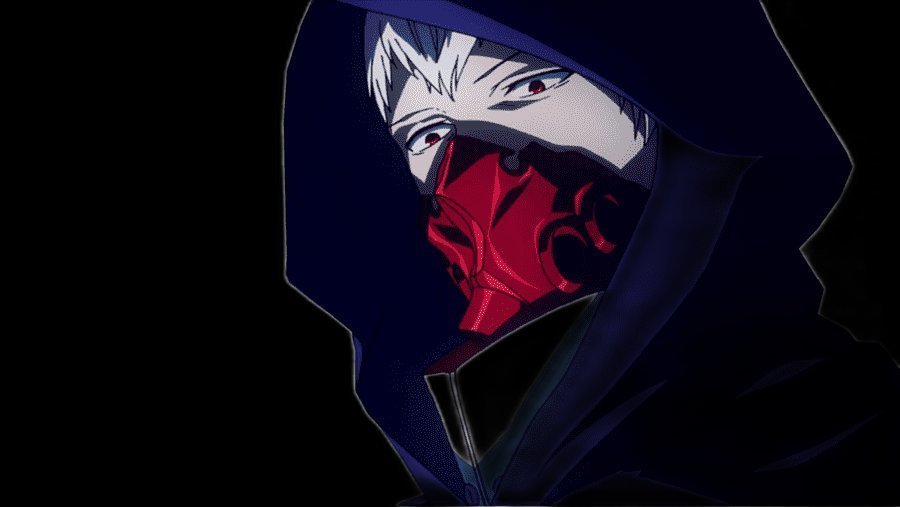
Tatara's appearance reflects his Chinese heritage and his status as a high-ranking Aogiri executive. He has dark skin and long black hair that falls past his shoulders, often tied back in a practical style that keeps it from interfering during combat. His build is muscular and imposing, suggesting years of intense physical training and combat experience. His face is characterized by sharp, angular features and a perpetual cruel smile that never quite reaches his predatory eyes. When his kakugan activates, his single ghoul eye glows with an intense crimson light, and in moments of extreme combat, faint traces of flame-like energy seem to flicker around his body, hinting at the fire-based abilities within his Kagune.
His clothing style is a distinctive blend of traditional Chinese elements and modern tactical gear. He wears a dark, ornate robe-like garment over practical combat clothing, with elaborate patterns that suggest both wealth and cultural heritage. The outfit is both ceremonial and functional, allowing full range of movement for combat while projecting an air of authority and mystique. Tatara often carries himself with the measured confidence of someone who has never encountered an opponent he could not defeat, his posture relaxed but ready. His presence alone is enough to silence rooms and intimidate most opponents, with CCG files noting that witnesses consistently describe an overwhelming sense of dread when in his vicinity. Unlike Yamori's deliberately terrifying appearance, Tatara's menace is more refined, emanating from his controlled movements and predatory stillness. His design emphasizes the contrast between civilized appearance and savage capability, making his violence more shocking when it erupts. In combat, Tatara's appearance transforms dramatically, with his Kagune manifesting as flame-wreathed appendages that illuminate his features in an eerie orange-red glow, giving him an almost demonic visage that terrifies opponents before he even strikes.
3. Personality
Tatara's personality is defined by cold pragmatism and an unwavering belief in survival of the fittest. He views the world through a lens of power dynamics, where strength is the only meaningful currency and weakness deserves whatever fate it receives. Unlike Yamori, who tortures for pleasure, Tatara's cruelty is utilitarian, employed only when it serves a strategic purpose. He is capable of patience and long-term planning, qualities that make him invaluable to Aogiri Tree's leadership structure. His respect for Eto is genuine because he recognizes her as more powerful and more strategically gifted than himself, and he serves her with unwavering loyalty not out of friendship but out of recognition of her superior strength and vision. This merit-based respect system extends to how he evaluates all around him, from allies to enemies.
Despite his brutality, Tatara displays a certain code of honor. He does not derive pleasure from suffering, viewing it as an unfortunate necessity in the struggle for ghoul liberation. This makes him more dangerous than sadistic antagonists, as his actions are driven by conviction rather than impulse. He is willing to sacrifice anyone, including himself, for Aogiri Tree's cause, demonstrating a level of ideological commitment that borders on fanaticism. His strategic mind is evident in how he manages Aogiri's operations across multiple wards, coordinating resources and personnel with efficiency that the CCG struggles to counter. Tatara is also notably reserved compared to other Aogiri executives, speaking only when necessary and preferring action over rhetoric. This quiet intensity makes him difficult to read in battle, as he gives few emotional cues about his intentions. His most defining personality trait is his utter certainty in his worldview. Tatara never doubts that might makes right, and this conviction gives him a psychological advantage in combat, as he fights without hesitation or moral conflict. This certainty is both his greatest strength and his most significant limitation, as it blinds him to forms of strength that do not fit his narrow definition.
4. Abilities
Tatara possesses one of the rarest Kagune types in Tokyo Ghoul: a hybrid Kagune that combines traits of both Bikaku and Ukaku types. This hybrid nature is exceptionally unusual, as most ghouls develop only one Kagune type determined by their RC cell configuration. Tatara's hybrid Kagune manifests as long, whip-like appendages that can extend and retract rapidly, combining the Bikaku's tail-like striking power with the Ukaku's projectile capabilities. What makes his Kagune truly unique is its elemental property: Tatara can generate and control flames through his Kagune, a power that no other ghoul in the series demonstrates. The flames emerge from his tentacles and can be shaped into projectiles, barriers, or area-denial weapons. This fire manipulation gives him both devastating ranged attacks that can engage multiple opponents simultaneously and close-combat options enhanced by superheated Kagune strikes.
In combat, Tatara fights with tactical precision rather than overwhelming force. He uses his ranged fire attacks to control the battlefield, forcing opponents into disadvantageous positions before finishing them with precise strikes. His hybrid Kagune's versatility means he can adapt his fighting style to counter different opponents, switching between ranged bombardment and melee engagement as the situation demands. The flames he generates are hot enough to cause third-degree burns on contact and can ignite flammable materials in the environment. Tatara can also create defensive barriers of flame to block attacks or restrict enemy movement. Beyond his Kagune abilities, Tatara is an experienced hand-to-hand combatant with years of practical fighting experience. His physical conditioning allows him to maintain high combat effectiveness even during prolonged engagements. CCG records classify Tatara as an S-rated ghoul, a designation reserved for threats requiring multiple Special Class investigators to handle. His combination of rare hybrid Kagune, fire manipulation, tactical intelligence, and combat experience makes him among the most dangerous members of Aogiri Tree, capable of facing multiple high-tier opponents simultaneously.
5. Story Arcs
Tatara's presence in Tokyo Ghoul spans from the original series into Tokyo Ghoul:re, though his direct involvement is concentrated primarily in the later story arcs. He is first introduced as a shadowy figure within Aogiri Tree's upper echelons, mentioned by other characters before making his first physical appearance. His early role involves coordinating Aogiri's operations across Tokyo, managing resources and personnel with enough efficiency to keep the organization running as a credible threat to both the CCG and other ghoul groups. During the Anteiku Raid arc, Tatara operates behind the scenes, orchestrating Aogiri's movements and ensuring the organization capitalizes on the chaos created by the CCG's assault. His limited direct involvement suggests Eto was preserving her strongest executives for future operations, treating the Anteiku conflict as a secondary concern rather than a primary objective.
In Tokyo Ghoul:re, Tatara's role expands significantly. He takes a more active role in Aogiri's operations as the organization faces increasing pressure from the CCG's Quinx Squad and Special Class investigators. The Rue Island operation becomes a critical moment for Tatara, as Aogiri Tree commits significant resources to holding the island as a ghoul sanctuary. Tatara leads defensive operations against the CCG invasion, demonstrating his tactical abilities in large-scale combat. His confrontation with the CCG's forces showcases his full combat capabilities, with his fire-based Kagune creating devastation across the battlefield. Tatara's death occurs during the Rue Island arc, where he is defeated by combined CCG forces after a prolonged battle. His loyalty to Eto and Aogiri Tree holds until the end, with his final moments dedicated to ensuring the organization's survival rather than his own. Tatara's death represents a significant blow to Aogiri Tree's operational capacity, removing one of its most strategically capable executives and signaling the organization's decline in the face of the CCG's renewed offensive. His legacy within the story is that of Aogiri Tree's most capable strategist, a figure whose influence outlasted his physical presence.
6. Relationships
Tatara's most significant relationship within Tokyo Ghoul is with Eto Yoshimura, the enigmatic leader of Aogiri Tree. Unlike Yamori's conditional loyalty, Tatara's devotion to Eto is absolute and based on genuine respect for her power and vision. He serves as her most trusted executor, carrying out her most ambitious plans with precision and without question. Their relationship is purely professional, built on mutual recognition of capability rather than personal affection, but within Aogiri Tree's brutal hierarchy, this professional respect is as close to friendship as exists. Eto trusts Tatara with strategic information she does not share with other executives, and Tatara in turn provides honest strategic assessments rather than sycophantic agreement. This honest working relationship makes them among the most effective leadership pairs in the series.
With other Aogiri Tree members, Tatara maintains distant but functional relationships. He views Yamori as a useful tool with severe limitations, recognizing his sadism as a weakness that makes him predictable. He has a professional respect for Ayato Kirishima's abilities, seeing potential in the younger ghoul's growth. With Noro, his fellow executive, Tatara maintains an unusual relationship characterized by Noro's silent obedience and Tatara's tactical direction. Lower-ranking Aogiri members fear Tatara more than they respect him, but his consistent strategic success and refusal to waste resources on pointless cruelty earn him a grudging loyalty that pure fear cannot achieve. Toward the CCG, Tatara shows no personal animosity, viewing investigators as obstacles to be removed rather than enemies to be hated. This lack of emotional investment in conflict makes him particularly dangerous, as he is never distracted by anger or revenge. His relationship with Kaneki is indirect, as Tatara views the one-eyed ghoul more as a strategic asset to be controlled than as an individual. His pragmatic assessment of Kaneki's potential leads him to support Eto's plans involving the half-ghoul, recognizing his symbolic value to the ghoul liberation cause even if he doubts Kaneki's personal commitment.
7. Cultural Impact
Tatara occupies a unique position in Tokyo Ghoul's cast of antagonists as one of the few characters whose abilities venture into elemental manipulation within the series' established Kagune system. His fire-based powers make him stand out in a world where most ghouls rely on physical Kagune manifestations, and this distinction has made him a topic of discussion among fans analyzing the biological mechanics of ghoul abilities. The rarity of his hybrid Kagune type has led to extensive fan speculation about the conditions required for such a mutation, with theories ranging from unique RC cell compositions to possible quinx-like human experimentation before his ghoul transformation. Tatara's Chinese-inspired design and name have also generated interest in the cultural influences present in Tokyo Ghoul, with fans noting how Ishida incorporated varied cultural elements into his world-building through characters like Tatara and the Chinese ghoul groups mentioned in the series.
In fan communities, Tatara is appreciated as a contrast to the more emotionally driven antagonists in the series. His cold pragmatism and strategic intelligence offer a different flavor of villainy compared to Yamori's sadism or the various CCG antagonists' ideological rigidity. Character popularity polls consistently place Tatara in the middle ranks, respected but not beloved, a position that accurately reflects his narrative role as an effective but not emotionally central antagonist. Cosplayers occasionally take on Tatara's distinctive design, though his relatively limited screen time and less iconic appearance compared to characters like Kaneki or Touka mean he appears less frequently at conventions. The Flame Emperor nickname has become his most enduring legacy within the fandom, used as shorthand to identify his character in discussions. Tatara represents a specific narrative function in Tokyo Ghoul — the competent lieutenant who makes the villain organization feel like a genuine threat through demonstrated strategic capability. This archetype, executed effectively in Tatara, has been recognized in analyses of Tokyo Ghoul's storytelling structure as an important element that elevates the series beyond a simple protagonist-versus-antagonist narrative.
8. FAQ
What is the origin of Tatara's fire abilities?
The exact mechanism behind Tatara's fire manipulation is never explicitly explained in the series. It is believed to be a unique property of his rare hybrid Bikaku-Ukaku Kagune, possibly involving RC cells reacting with the atmosphere to generate extreme heat. No other ghoul in Tokyo Ghoul demonstrates similar elemental abilities, making Tatara's power completely unique.
How does Tatara rank in power among Aogiri Tree executives?
Tatara is consistently portrayed as one of Aogiri Tree's strongest members, operating just below Eto in the hierarchy. His hybrid Kagune and fire abilities make him a threat that requires multiple Special Class CCG investigators to handle. He is considered stronger than Yamori and on par with or slightly above Ayato in combat capability.
Does Tatara survive until the end of Tokyo Ghoul:re?
Tatara is killed during the Rue Island arc in Tokyo Ghoul:re after a prolonged battle with CCG forces. His death represents a significant blow to Aogiri Tree's operational capacity and marks the beginning of the organization's decline. He dies loyal to Eto and Aogiri Tree's cause, fighting to the last.
What is the significance of Tatara's Chinese-inspired design?
Tatara's design draws influence from Chinese folklore and martial traditions, reflecting his implied origins outside Japan. This cultural dimension adds depth to Tokyo Ghoul's world-building by suggesting that ghoul society has regional variations and that Aogiri Tree's membership extends beyond Japanese ghouls into broader East Asian ghoul networks.
How does Tatara compare to other anime villains with fire powers?
Unlike many anime fire-users who rely on external techniques or magical systems, Tatara's flames are a direct biological expression of his unique hybrid Kagune, rooted in the series' RC cell biology framework. This grounded approach to a seemingly supernatural ability makes him distinctive within the dark fantasy genre.