1. Overview
Shuu Tsukiyama, known throughout the Tokyo Ghoul underworld as "The Gourmet," is one of the series' most flamboyant and memorable characters. Born into the wealthy and influential Tsukiyama family, he approaches ghoul existence with an aesthetic sensibility, treating the hunt and consumption of human flesh as a refined culinary art rather than a brutal necessity. His introduction to the story comes when he sets his sights on Ken Kaneki, whose unique flavor as a one-eyed ghoul becomes an obsession that drives much of the early conflict. However, Tsukiyama's role in the narrative evolves significantly over the course of the series. What begins as predatory fascination transforms into genuine friendship and unwavering loyalty, making him one of Kaneki's most dependable allies in the battles against the CCG and Aogiri Tree. His character arc traces a path from self-indulgent hedonist to self-sacrificing protector, a transformation powered by his growing emotional connections to those around him. Beneath the theatrical mannerisms and extravagant lifestyle beats the heart of a deeply lonely individual whose family's wealth could not buy genuine connection. Tsukiyama's journey is one of the series' most unexpected and satisfying redemption arcs, as a man who initially saw others as meals learns to see them as friends worth dying for. His refined taste, dramatic flair, and unwavering commitment to his aesthetic principles make him one of Tokyo Ghoul's most distinctive and beloved characters.
2. Appearance
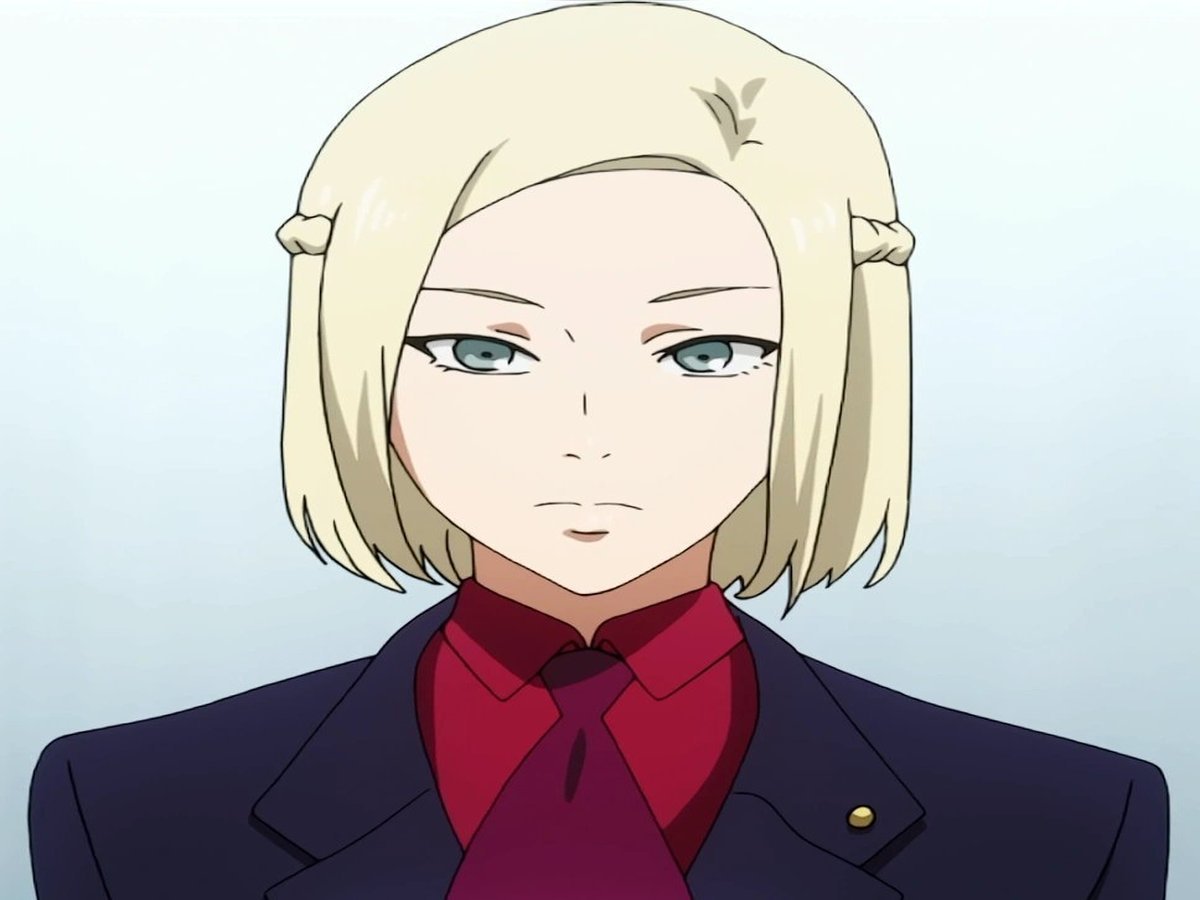
Tsukiyama is a strikingly tall and slender man, standing well above average height with a lean, aristocratic build that reflects his privileged upbringing. His most immediately recognizable feature is his distinctive violet hair, styled in a sophisticated swept-back manner that frames his angular, elegant face. His sharp, narrow eyes and perpetual knowing smirk give him an air of theatrical superiority that matches his dramatic personality. He is almost always impeccably dressed in expensive, fashion-forward clothing, favoring designer suits, tailored vests, silk scarves, and tasteful accessories that project wealth and refined taste. His personal aesthetic draws heavily from European aristocratic fashion, and he carries himself with the practiced grace of someone accustomed to being the center of attention. In combat situations, his attire remains elegant even when practical considerations demand mobility, and he manages to look fashionable even while fighting for his life. When his kakugan activates, his left eye shifts to a crimson-red iris against a black sclera, a subtle but menacing transformation that signals his ghoul nature.
His Bikaku-type Kagune manifests as a single long, tail-like appendage extending from his lower back, typically a deep violet-black color that matches his hair. The Bikaku is the most balanced Kagune type, offering a mix of speed, power, and reach without extreme strengths or weaknesses. Tsukiyama's Bikaku is notably refined in appearance, with a smooth, almost polished surface that reflects his aesthetic sensibilities even in his weapon. As the series progresses and Tsukiyama's character evolves, his appearance becomes slightly more practical and less ostentatious, particularly during the :re era when he operates as a serious fighter and intelligence operative. However, he never completely abandons his sense of style, and even in the most desperate battles, he finds ways to incorporate elegance into his combat attire. His visual design has become iconic among Tokyo Ghoul fans, representing the series' blend of horror and high fashion, and his violet hair and dramatic poses are instantly recognizable hallmarks of his character.
3. Personality
Shuu Tsukiyama's personality is a complex blend of theatrical extravagance, genuine intelligence, and deep emotional vulnerability. On the surface, he is the picture of aristocratic refinement: eloquent, cultured, and obsessed with beauty in all its forms. His speech is peppered with French phrases and dramatic declarations, and he approaches every situation, from dining to combat, as an art form to be appreciated. His obsession with Kaneki initially stems from a purely gourmet interest, viewing the young half-ghoul as the ultimate culinary experience. He describes Kaneki's scent, flavor, and essence with the same reverence a wine connoisseur might reserve for a rare vintage. This predatory fascination leads him to stalk Kaneki, arrange elaborate traps, and attempt to consume him in a theatrical feast. However, beneath this extravagant exterior lies a deeply lonely individual. The Tsukiyama family, despite their wealth and power, is emotionally cold and politically calculating. Shuu grew up surrounded by luxury but starved for genuine human connection, and his obsession with Kaneki is as much about emotional need as it is about gastronomic desire.
As the series progresses, Tsukiyama's personality undergoes a remarkable transformation. Defeated by Kaneki and spared despite his attempt on Kaneki's life, he begins to question his own values. His gratitude for Kaneki's mercy evolves into genuine admiration and eventually deep loyalty. He becomes one of Kaneki's most reliable supporters, using his family's resources and his own intelligence to aid Kaneki's cause. His dramatic nature never fades, but it becomes endearing rather than threatening, and his loyalty to his friends becomes his defining trait rather than his gourmet obsessions. In :re, Tsukiyama has matured into a serious and capable ally, though he retains his theatrical flair for comic relief moments. He maintains his appreciation for fine things but has learned to value people above pleasures. His emotional core is revealed through his willingness to sacrifice everything, including his family's fortune and his own safety, for the people he cares about. Tsukiyama's arc demonstrates that even the most self-centered individuals can change when they find something worth believing in beyond themselves.
4. Abilities
Tsukiyama wields a Bikaku-type Kagune, characterized by a single tail-like appendage that extends from his lower back. The Bikaku is widely considered the most balanced Kagune type, offering moderate speed, moderate power, and extended reach without the extreme trade-offs of other types. Unlike the Ukaku's limited stamina or the Koukaku's reduced mobility, the Bikaku provides reliable all-around combat capability that suits Tsukiyama's adaptable fighting style. His Kagune manifests as a long, whip-like tail with a sharp, blade-like tip that can pierce through flesh and steel with equal ease. He uses it with remarkable precision, able to strike with surgical accuracy or deliver sweeping attacks that cover a wide area. The tail's length gives him excellent reach, allowing him to engage opponents from a distance while keeping his body out of harm's way. His combat approach emphasizes mobility and technique over raw power, using his agility and the Kagune's versatility to control the flow of battle.
Beyond his Kagune, Tsukiyama is exceptionally intelligent and resourceful. His family's vast wealth provides him with extensive resources, including safe houses, information networks, and political connections within ghoul society. He becomes one of Kaneki's primary intelligence gatherers, using his social status to move freely through high-society circles where vital information is exchanged. His knowledge of fine dining and human culture also proves valuable in understanding human behavior and predicting CCG movements. In combat, Tsukiyama demonstrates impressive physical conditioning and acrobatic skill, able to fight effectively even without relying solely on his Kagune. He is a capable hand-to-hand combatant with a style that emphasizes evasion and counter-attacks. His Bikaku's reach complements his evasive fighting style, allowing him to keep opponents at a distance while wearing them down with precise strikes. In :re, Tsukiyama has further refined his abilities, gaining greater control over his Kagune's shape and density. He can harden specific segments for piercing attacks or use the tail's flexibility to entangle and disarm opponents. While not among the physically strongest characters in the series, his combination of intelligence, resources, combat skill, and unwavering loyalty makes him an invaluable asset in any conflict.
5. Story Arcs
Tsukiyama is introduced in the early chapters of Tokyo Ghoul as a mysterious and sophisticated ghoul who has heard rumors of a one-eyed ghoul roaming Tokyo. His interest in Kaneki begins as a collector's curiosity, but it quickly escalates into an all-consuming obsession when he realizes Kaneki's unique nature as a half-ghoul created through organ transplantation. He orchestrates an elaborate scheme to capture Kaneki, inviting him to a lavish dinner party that serves as the setting for his attempted consumption. The confrontation that follows is a turning point for both characters. Kaneki, still early in his development as a ghoul, manages to defeat Tsukiyama through sheer determination and the unexpected strength of his Rinkaku Kagune. Rather than killing Tsukiyama, Kaneki spares him, an act of mercy that profoundly affects the Gourmet and plants the seeds for his eventual redemption.
After his defeat, Tsukiyama begins to change. He becomes an uneasy but increasingly reliable ally to Kaneki and the Anteiku group, using his resources to help them in their conflicts with Aogiri Tree and the CCG. His loyalty is tested repeatedly, particularly during the Aogiri Tree invasion and the subsequent Anteiku Raid, where he fights alongside Kaneki despite knowing the odds are against them. The fall of Anteiku and Kaneki's apparent death devastate Tsukiyama, but they also cement his resolve to honor Kaneki's memory by continuing to fight for ghoul rights. In Tokyo Ghoul:re, Tsukiyama has become a key figure in the resistance against the CCG. He operates as a intelligence operative and logistical supporter, using his family's resources to fund and supply ghoul safe houses. When Kaneki reappears as the One-Eyed King, Tsukiyama is one of the first to rally to his cause, their friendship having survived years of separation and trauma. He participates in the Rue Island operation and later in the battles against the CCG's Oggai squad. His most defining moment comes when he willingly sacrifices the Tsukiyama family fortune to support Kaneki's vision of a ghoul sanctuary on Rue Island, choosing his found family over his biological family's legacy. Tsukiyama survives the series' conclusion, having found meaning and purpose through his connections with others, a far cry from the lonely gourmand he was at the story's beginning.
6. Relationships
Tsukiyama's relationship with Ken Kaneki is the most transformative of his life. It begins as predator and prey, with Tsukiyama viewing Kaneki as the ultimate culinary prize. His obsession drives him to stalk, capture, and attempt to consume Kaneki at an elaborate dinner party. However, Kaneki's mercy after defeating him fundamentally alters Tsukiyama's worldview. Gratitude, curiosity, and genuine admiration begin to replace his predatory instincts. Over time, Tsukiyama develops what can only be described as deep devotion to Kaneki, supporting him through every crisis and putting himself in danger repeatedly for Kaneki's sake. Their bond is unusual in that Tsukiyama never entirely loses his dramatic, obsessive edge, but it evolves into something genuinely caring and selfless. He is among the few characters who remain consistently loyal to Kaneki from the original series through :re, never wavering even when Kaneki himself doubts his own worth.
His relationship with his family, particularly his father, is complex and largely negative. The Tsukiyama family is among the most powerful ghoul families in Tokyo, with vast wealth and political influence. However, this power comes at the cost of emotional warmth. Tsukiyama's father is cold, pragmatic, and views his son primarily as a tool for advancing family interests. This loveless upbringing explains much of Tsukiyama's initial emptiness and his desperate search for meaning through aesthetic pleasure. His decision to side with Kaneki against his father's wishes represents his final break from family expectations and his commitment to his own moral code. Tsukiyama also develops meaningful bonds with other Anteiku members, including Touka and Yoshimura. Touka initially despises him for his predatory behavior toward Kaneki, but over time they develop a grudging mutual respect as allies. Yoshimura, ever the patient mentor, sees potential in Tsukiyama that others miss and offers him the same guidance he offers all lost ghouls. In :re, Tsukiyama becomes a mentor figure to younger ghouls, passing on the wisdom he gained through his own redemption. His relationships across the series demonstrate that genuine connection can transform even the most self-absorbed individual into someone capable of profound loyalty and sacrifice.
7. Cultural Impact
Shuu Tsukiyama occupies a unique place in Tokyo Ghoul's character roster as the fan-favorite antagonist-turned-ally whose theatrical personality and memorable quotes have made him one of the series' most quotable characters. His dramatic declarations, particularly his obsession with "delicious" things and his poetic descriptions of Kaneki's flavor, have become iconic moments that fans frequently reference and parody. Tsukiyama's character design, with his distinctive violet hair, elegant fashion sense, and aristocratic bearing, stands out even in a series known for striking character designs. He has been a popular choice for cosplay since the anime adaptation aired, and his visual aesthetic has influenced how subsequent anime depict wealthy, sophisticated ghoul characters.
His redemption arc is often cited as among the most effective in dark fantasy manga. Unlike redemption arcs that rely on tragic backstories to excuse past behavior, Tsukiyama's transformation feels earned because he actively chooses to change after experiencing kindness he did not deserve. This nuanced approach to character redemption has influenced later manga and anime series seeking to rehabilitate initially antagonistic characters without resorting to memory loss or sudden personality shifts. Tsukiyama's blend of comic relief and genuine dramatic weight also set a template for the "flamboyant redeemed villain" archetype in anime. His ability to be simultaneously hilarious and heartbreaking, sometimes in the same scene, demonstrated that characters could serve multiple narrative functions without diminishing their emotional impact. Academically, Tsukiyama has been analyzed as a representation of aestheticism and hedonism as coping mechanisms for existential trauma. His journey from treating life as a banquet of sensations to finding meaning through connection with others mirrors philosophical questions about the purpose of existence that the series explores through multiple characters. For fans, Tsukiyama remains beloved for his unwavering loyalty, his dramatic flair, and his capacity for growth, proving that even characters who start as villains can earn a place in the hearts of audiences.
8. FAQ
Why does Tsukiyama call Kaneki "delicious" so often?
Tsukiyama refers to Kaneki as delicious because, as a one-eyed ghoul, Kaneki possesses a unique biological composition that combines human and ghoul traits. To Tsukiyama's refined palate, this hybrid nature creates an unparalleled flavor profile that he describes as intoxicating. The term becomes a running motif that evolves from genuine predatory interest to an affectionate nickname as their relationship transforms from hunter and prey to devoted friendship.
Does Tsukiyama ever actually try to eat Kaneki?
Yes, Tsukiyama attempts to consume Kaneki during their first major confrontation. He orchestrates an elaborate dinner party where he intends to make Kaneki the main course. However, Kaneki defeats him in combat, and rather than killing Tsukiyama, spares his life. This act of mercy profoundly affects Tsukiyama and sets him on the path from antagonist to ally. He never attempts to harm Kaneki again after this encounter.
What type of Kagune does Tsukiyama have and what are its strengths?
Tsukiyama has a Bikaku-type Kagune, a tail-like appendage that offers balanced combat capabilities without extreme weaknesses. Bikaku Kagune provide good speed, power, and reach, making them versatile in various combat situations. Tsukiyama's refined control over his Bikaku allows him to use it with surgical precision, striking from distance while maintaining excellent defense, though it lacks the raw destructive power of Rinkaku or the speed of Ukaku types.
What happens to Tsukiyama's family fortune in :re?
Tsukiyama willingly sacrifices his family's vast fortune to support Kaneki's vision of creating a ghoul sanctuary on Rue Island. This decision represents his complete break from his family's cold, pragmatic values and his commitment to Kaneki's cause. By choosing his found family over his biological family's legacy, Tsukiyama demonstrates how much he has grown from the self-centered gourmand he once was into someone willing to give up everything for others.
Does Tsukiyama survive the events of Tokyo Ghoul:re?
Yes, Tsukiyama survives :re and is present at the series' conclusion. Having found purpose and genuine connection through his relationships with Kaneki and other ghouls, he continues his life having transformed from a lonely hedonist into a loyal friend and protector. His survival is fitting for a character whose arc is about redemption and finding meaning through connection with others rather than through aesthetic pleasure alone.